Saturday, May 28, 2016

The Value of Agent Carter


Introduction: Her First Name is Agent

Some of the most emotional moments of the last two Captain America movies involve Peggy Carter, Steve Rogers’ love interest introduced in The First Avenger. While the scenes pack a huge punch thanks to the heartfelt chemistry Chris Evans and Hayley Atwell had in the first film, they are even more devastating after watching Agent Carter.

Peggy’s spinoff show, set just after the events of Captain America: The First Avenger, is actually the stronger of Marvel’s two ABC shows. This is in no small part due to Atwell’s dynamic performance as Peggy, who transforms her character from “Captain America’s girlfriend” into a fully independent, engaging, downright badass woman who always gets the job done. A spy show like SHIELD, Carter manages to occupy its own niche in the MCU by taking full advantage of its period setting. Not just the aesthetics, but the whole mindset of a post-WWII America struggling to redefine itself after the war.

Season One: A Sense of History

For Peggy, that means dealing with the overt sexism that dominated the time. Carter’s first season dealt almost exclusively with how men returning from war treated women as glorified secretaries, ignoring their pivotal roles in the war effort both at home and overseas. Peggy’s struggle is very real here, as she deals with her male coworkers in the Strategic Scientific Reserve, the predecessor to SHIELD. Undervalued as an agent, Peggy is forced to take matters into her own hands and operate off the books when Howard Stark is framed for war profiteering. It’s a fantastic setup that leads to real danger and intrigue for Peggy, who sets out to prove her own worth as an agent in a world that no longer values her.

There are multiple reasons why Carter succeeds so spectacularly right out the gate, whereas SHIELD initially floundered. Aside from Atwell’s performance, one of the show’s greatest aspects is its shortened season. Compared to the 22 episode run of a SHIELD season, Carter’s first season has only eight episodes, while its second has ten. The miniseries vibe each season gives off allows for a more focused story, with every episode furthering the plot with next to no filler. The shorter season works wonders, as it maximizes the potential of both the plot and its characters. Not only does Peggy become a fully developed person here, but the entire supporting cast gets moments to shine.

Peggy’s SSR coworkers, Daniel Sousa and Jack Thompson, come to appreciate Peggy’s worth as an agent, while trying to find their own sense of purpose after wartime. Howard Stark is back from The First Avenger with his womanizing ways, but secretly harbors an immense guilt over some deadly inventions. The greatest side character, however, is James D’Arcy’s Edwin Jarvis, Stark’s butler who will go on to serve as the basis for Tony Stark’s A.I. (and therefore, the Vision) in the Iron Man and Avengers movies. Jarvis makes for a fantastic sidekick to Peggy, at once entirely proper while not afraid to assist Peggy with whatever dangers she faces.

Aside from the characters and more focused story, the period setting gives Carter the breathing room that SHIELD didn’t always have. With its mid-to-late 1940s setting, the show is basically cut off from the rest of the MCU, but gets to develop the universe more by giving the films a true sense of history. We get to see how the SSR operates, and therefore an idea of how the organization will grow into SHIELD. We see the villains using mind control techniques that will one day be used on both the SHIELD show and in The Winter Soldier. And amazingly, we also get a better look at the Red Room, the Soviet operation that will one day create Scarlett Johansson’s Black Widow.

That development also introduces the show’s best villain, Dottie Underwood, a proto-Black Widow who serves as a perfect foil for Peggy. Equal parts charming and deadly, Dottie is a powerhouse who elevates the story every time she’s on screen, especially when interacting with Carter. Her story dovetails perfectly with Peggy’s, as Dottie actually becomes jealous of Peggy’s lifestyle while Dottie was forced from childhood to be an assassin. This is ironic, considering Carter struggles not only to be accepted by a patriarchal society, but to move on from the tragedy of Steve’s “death.” Even with this running thread, the show emphasizes how it’s not about Captain America. It’s all about Peggy, and thanks to Atwell’s charisma and infinite charm, we as viewers know it.


Season Two: New City, New Dangers

Carter season one had a great story and even greater characters at its center. For its follow-up (and unfortunately final) season, Agent Carter sought to give more development to Peggy, Jarvis, Thompson and Sousa while moving the story from New York to L.A. This gives the whole season an entirely different feel from the last one, while still evoking that ‘40s-‘50s period aesthetic which works so well for it.

Peggy’s past is glimpsed through some key flashbacks, which give us a greater sense of who she was before she signed up with the SSR. What’s more, we see her operate directly with her male co-workers, showing how much more accepted she now is. Her teased romance with Sousa also moves forward in big ways, but never acts as the season’s focus. Instead, we get newly promoted SSR chief Jack Thompson being groomed for bigger things, while Peggy, Sousa and Jarvis deal with new villain Whitney Frost, a brilliant scientist who masquerades as a famous actor.

Frost acts as both a worthy opponent and another great foil to Peggy. Whereas Peggy was encouraged in her youth to break free of society’s expectations of her, Frost was forced to hide her scientific brilliance and got by solely on looks. It makes for a great dynamic between the two, helped by Frost’s scientific background and knack for strategy. She’s at the center of a conspiracy involving Zero Matter, a destructive property from another dimension discovered during an atomic bomb test.

Zero Matter becomes the season’s focus, and while it provides a neat allegory for atomic threats, its full capabilities are never really shown. The characters talk about how it could potentially change the world, but aside from nearly blowing up a city, we never really get a sense of what’s so game changing about it. Compared to the straightforward Stark inventions that fueled season one, Zero Matter just doesn’t measure up. It’ll probably come in very handy for explaining parts of the Doctor Strange movie in November, but here, it’s almost out of place.

Zero Matter of Stakes

The Zero Matter also reduces Whitney Frost’s effectiveness as a villain. After getting “possessed” by it, Frost slowly goes insane, which ends up hurting her role in the plot. She plays next to no role in the season’s climax, and as such the stakes don’t feel as high as the first season’s, where Dottie and a vengeful Russian agent nearly destroyed New York. It’s such a shame too, as up to that point Frost was a more than compelling villain. Jack Thompson’s role doesn’t fare too much better, as he becomes wrapped up in a conspiracy involving an elite Patriarchy club that connects with Frost’s story but isn’t nearly as interesting. Thompson is developed more, and the club he’s groomed to join serves its purpose with Frost, but it’s simply not as engaging as a threat to Peggy and the SSR.

Thankfully, the season’s more uneven parts are balanced out by some fantastic character work. Jarvis benefits greatly from this, as we meet his wife and get to see more of his mindset when going on missions with Peggy. It all snowballs into an emotionally devastating event which renders Mrs. Jarvis unable to have children, made all the more heartbreaking by Jarvis’s reaction to the news. It’s also unintentionally a huge moment for the MCU, since it’s probably Jarvis’s inability to have children that leads him to help raise Tony. By the end of the season, there is no longer any mystery as to why Stark would base an A.I. after this man.


Conclusion: We Know Her Value

Ultimately, the greatest flaw of season two is how it wraps up almost all of its major story beats only to leave things on a massive cliffhanger. A major character is shot over a file regarding one of Peggy’s WWII missions. This is infuriating, because with the show’s recent cancellation, we’ll never see it resolved. Neither will we see how the SSR became SHIELD, nor whether Sousa is the husband Peggy refers to in Winter Soldier (he probably is, but still, it’d be nice to know).

Yes, the events of the last two Captain America movies (and her cameo in Ant-Man) make this all inconsequential in the long run. We know Peggy founds SHIELD, gets Alzheimer’s and then dies by Civil War. But that doesn’t account for how Agent Carter has fleshed out this very interesting part of Peggy’s life, a part that we’ll never get proper closure to. Barring a Netflix continuation, a TV movie, another One Shot or flashbacks on SHIELD, this is it for Agent Carter. And it’s a massive shame, because despite a few season two flaws, this was a huge testament to the power a female-centric show could wield.

Carter’s best moment came at the end of season one, when Peggy is denied credit for saving New York. She makes a statement that perfectly sums up why the show was so great. “I know my value; anyone else’s opinion doesn’t really matter.” It’s a fantastic quote that emphasizes how confident Peggy is, and how confident Atwell is playing her. It’s a statement on how Peggy is just as good, and often better, than the men around her in a world that is constantly trying to push her down. But in the wake of the show’s cancellation, it’s also a rallying cry for fans to never forget just what Peggy has done for the MCU. She’s not just Marvel’s first female lead. Peggy Carter is one of the MCU’s best characters, period. Agent Carter made all its viewers know that, so her value can continue to be seen now that the show, and her character, have passed on.


Friday, May 27, 2016

Agents of SHIELD: Small Screen Marvels


Introduction

One of the few constants I’ve kept in the years since I’ve started this blog is my continuing coverage of the Marvel Cinematic Universe. As of last Thursday, I’ve reviewed 11 of the 13 films in the MCU, all the One-Shot short films, and season one of Agents of SHIELD. However, due to my prolonged absence, I was unable to properly review Avengers: Age of Ultron, Ant-Man, or the Daredevil, Jessica Jones and Agent Carter shows.

For the sake of my credibility as a superhero nerd, I am honor bound to “catch up” on everything Marvel, so for the next few days I will be reviewing all the MCU films and shows that I haven’t covered yet. To begin, I give unto you a thorough analysis of all three seasons of Agents of SHIELD, Marvel’s inaugural TV show, since the third season took its bow just last week. Be warned, here there be spoilers.

Season One: Hail Hydra!

First, the story so far. SHIELD’s first season was handicapped by an initially rocky first batch of episodes. While there was promise in putting a resurrected Agent Phil Coulson (Clark Gregg) from The Avengers in charge of his own small, elite team of SHIELD agents, the episodes were too standalone in nature and, without an overarching threat, lacked agency. It was only during the back half of the season did the show finally gain a legitimate threat. That threat was the Nazi cult HYDRA disguised as SHIELD, a twist that could only be revealed once Captain America: The Winter Soldier exposed that key detail.

Once HYDRA stepped into the spotlight, the show’s quality improved significantly. Coulson learns he was resurrected by Nick Fury with blood from an alien corpse (it’s a long story) and had to confront the fact that one of his hand-picked agents, Grant Ward, was a HYDRA mole alongside his mentor John Garrett. This revelation did wonders for the show, giving it a better focus from the “X-Files light” vibe the season’s first half had. It also started Ward on the path to becoming one of the better MCU villains outside of the films.

While the first half of the season was by and large inferior, it did allow us as viewers to familiarize with the characters, including Melinda “The Calvary” May, adorkable scientist duo Leo Fitz and Jemma Simmons and the orphaned hacker Skye, who Coulson took on as a protégé. These earlier adventures did eventually give weight to the HYDRA twist towards the season’s climax. They also turned the complicated resurrection of Coulson into a thrilling plot point, which managed to make sense in the context of the MCU and help set up future events.

Coulson’s death was a huge turning point in the first Avengers film, and his resurrection was clearly motivated in a meta sense by his popularity with fans. Ultimately, the show justifies this by showing the lengths it took to bring Coulson back, while giving him greater depth as a character and allowing him to act as a mentor figure to the other agents, Skye especially.


Season Two: Enter, the Inhumans!

I’m reiterating all this because, going into season 2, the complete 180 change in tone does wonders for the show, and it wouldn’t have been possible without the transition that began at the end of season one. The premise becomes a lot more espionage based, as it should be, with the taking on of new recruits like Bobbi Morse/Mockingbird, her mercenary ex-husband Lance Hunter and talented everyman Mack. These are all great additions that add more flavor to the cast. Coupled with the HYDRA reveal, SHIELD’s new rogue agency status under Coulson and Ward’s presence as a Hannibal Lecter type, the show is given a much needed sense of urgency.

Coulson’s resurrection ties neatly into Skye’s character arc, as it’s revealed that the alien whose blood runs through Coulson’s veins is a Kree, the race Ronan comes from in Guardians of the Galaxy. It’s a nice little tie-in that highlights what the show should’ve been doing from the beginning: expanding the world of the Marvel films organically, without forcing tie-ins to the movies.

As a show about SHIELD, it made sense that the HYDRA reveal from Winter Soldier should impact the characters, but having them essentially clean up the messes of Iron Man 3 and Thor: The Dark World only felt forced. It’s neat to have Lady Sif from the Thor films pop in every once in a while, but does she really belong in a show about spies?

It’s something that season 2 thankfully corrects, as the show becomes more preoccupied with its own characters and developing its own part of the MCU than forcing tie-ins to the films. The Kree connection is great because it’s a natural link to Guardians without overtly referencing that film’s events. It’s used instead to set up a new story that becomes pivotal to the show going forward, signaling a new threat that is both entwined and separate from HYDRA.

What is that threat? The Inhumans: Kree/human hybrids with built-in superpowers, of whom Skye is one. And not just any old Inhuman, but the MCU’s version of Daisy Johnson/Quake, the earth-moving superhero of the comics. Skye’s empowerment and learning of her heritage does wonders for her character arc here. It not only introduces genuine superpowers to the show, but allows Skye/Daisy’s growth as a hero to parallel Ward’s growing acceptance of himself as a villain. Ward’s icy calmness hides a boiling yet calculated rage that makes him simply fascinating to watch, and his descent into villainy throughout the show is what makes him one of the MCU’s most complex villains.

But Ward isn’t the only villain here. Alongside Ward and HYDRA are Daisy’s father, Dr. Calvin Zabo/Mr. Hyde, and mother Jaiying, the leader of an Inhuman sanctuary. Zabo is easily one of the best things about season two, being somehow both over the top and strangely sympathetic in his attempts to reunite with his lost daughter. The season essentially boils down to a tense confrontation between Skye and her parents, and that very human focus makes it a great finale.

Season Two (and a half): The Problem with Movie Tie-Ins

With that said, the latter half of this season, while still great, suffers a bit compared to the first half. The compelling HYDRA plot gives way to the Inhumans and a schism in SHIELD over how to deal with them, as they’re essentially turned into a stand-in for mutants (thank Fox for that, otherwise we may have gotten X-Men here). Skye’s mother Jaiying is basically Xavier before turning into Magneto, in a somewhat jarring twist that nevertheless ties both halves of the season together thematically. It’s all well-played, if a little conventional given the tropes the show is working with.

The greatest flaw in season two’s latter half, however, is the tie-in with Age of Ultron. Instead of dealing with the after effects of the films like in season one, or seeding a small link to Guardians, the Ultron tie-in is so incredibly forced that it ultimately hurts both the show and the film it’s supporting. It comes down to Coulson preserving an old Helicarrier, which Fury then uses for the Ultron climax in Sokovia. The revelation obviously isn’t important to the film, otherwise it would’ve been mentioned, and the show glosses over it almost immediately afterwards to go back to the Inhumans plot.

The whole thing feels cynically corporate, more so than any of the tie-ins in season one. Seeing this only highlights the fact that the show is much better focusing on its own plots than trying to force connections to the movies. And what’s really great is that, by the end of the second season, SHIELD has become so good at telling its own stories, with its own uniquely developed characters, that it doesn’t even need the movies as a crutch aside from the occasional fun shout out. Everything it does, it does to further its own story, and its MCU connections are now more interesting since the show is adding something to the continuity of the films, rather than the films basically propping up the show.


Season Three: And Lo, the Secret Warriors Shall Come!

With the show now more standalone from the films than ever, season three goes full throttle with its plotlines. Between Skye/Daisy setting up the Secret Warriors Inhuman team with fellow Inhuman Lincoln, Coulson’s rivalry/romance with government liaison Rosalynd, May’s ex-husband becoming the Inhuman killer Lash, Ward reviving HYDRA with its last head Gideon Malick and Simmons falling through a portal to an alien world, there are a lot of balls to juggle.

And that’s why season three’s first half stumbles a bit setting all this up. There’s simply way too much going on at once, and while a TV show can obviously afford to spend more time with these plots than a movie can, it feels almost like overkill. But then the show does something miraculous, and reveals that all these seemingly unconnected plots are really just parts of a whole. The portal subplot, which seems unnecessary, ends up becoming the main goal of HYDRA, as they plan on using it to return an ancient, exiled Inhuman to Earth.

It’s stunning how expertly the show weaves these separate plots into one giant story, all while never losing sight of the characters that are now the show’s heart. Fitz’s romance with Simmons, and his quest to get her back, is particularly well-played, as is Simmons’ attempts to survive on this harsh alien world (seriously, it’s one of the show’s best episodes).

Everything coalesces into a pitch perfect mid-series finale that closes off some threads while opening brand new ones. Coulson gets some great development here, as his actions directly cause a new threat to emerge in the form of Hive, the aforementioned ancient Inhuman who HYDRA worships as a god. Armed with the ability to possess the bodies of dead humans and take control of other Inhumans, Hive begins a campaign to make the Earth more Inhuman-friendly. This leads to a much more streamlined back half of season three that dispenses (permanently, it seems) with HYDRA while moving Daisy into the forefront as the new focus.

Daisy’s need to belong and have a family, established all the way back in season one, comes full circle with Hive in ways you might not initially expect. On a larger scale, relationships become a key focal point for the season, as FitzSimmons, May, Coulson, Mack, Daisy and Lincoln all have huge character moments based on their viewing of SHIELD as a surrogate family. This is made even more poignant during an episode where Bobbi and Lance are forced to leave the team, with their teammates giving them a tearful goodbye that is one of the show’s saddest moments.

It is also here when the tie-ins to the films become better, because they’re virtually nonexistent. Season three chooses to tie in with Captain America: Civil War thematically instead of overtly. Hive’s plan is inspired by how only those in power have the means to create superheroes, as he hopes to turn regular humans without Kree DNA into Inhumans. It all leads to a fantastic, emotional finale that wisely focuses on Daisy and her need for belonging. The one weak point is that as the show finally seems to wrap up most of the threads hanging since season one, it cuts to six months later to begin a brand new story arc. If the season was allowed to end more organically, and let the emotional beats play out, it would’ve been a spectacular ending to a thrilling season. Instead, it’s a lukewarm ending that’s focused more on what comes next than wrapping up what they already have.


Conclusion

So after watching this show go from being a weak Marvel commercial to a compelling super-powered spy drama, was it really all worth it? Given what Marvel TV has now become, was this show really how Marvel should’ve gotten onto the small screen? Did Coulson really need to be resurrected? What’s the point of doing the Inhumans when it looks like the Inhumans movie is now cancelled? Why give an emotional farewell to Lance and Bobbi when their spinoff, Most Wanted, was passed over? And most importantly, why follow a team of spies that operate in the shadows, when they and their actions are pretty much ignored by the films?

All compelling questions, and they all have a simple answer. Despite what this show started as, when looking at what it’s become, Agents of SHIELD has completely earned its place in the tapestry of the MCU. The film and spinoff show it could’ve helped set up may now be in jeopardy, but given that we’re getting a fourth season, there’s still plenty of time to wrap up whatever threads remain. Given Most Wanted being passed over and sister show Agent Carter being cancelled, coupled with the fourth season moving to the 10 pm time slot this fall, it looks like the show may not even be on the air much longer. If the upcoming fourth season is its last, Agents of SHIELD will still have justified its existence.

And that’s purely because the characters have now become so enduring, and their stories so captivating, that we don’t need Iron Man or Captain America to show up to make things exciting. Coulson’s SHIELD agents occupy their own corner of the MCU, and even if it may not be “essential viewing” to anyone who isn’t a Marvel diehard, it still fleshes out a part of the universe we wouldn’t see in the films. I strongly recommend giving this show a try. Any flaws it once had have given way to a fantastic show that knows how to treat its characters with respect. Take your time with it, and you will be rewarded, as the buildup leads to one hell of a payoff. As a tie-in to the larger Marvel film world, SHIELD doesn’t always work. But when it’s simply telling its own story, SHIELD is a blast, and as long as it keeps this momentum going, it’ll continue to be so. 

Thursday, May 19, 2016

Captain America: Civil War Review


Intro: The Marvel World's Finest

It’s very rare that we as filmgoers get a movie like Captain America: Civil War. Quite frankly, it’s a miracle the film even exists. Considering it features in-fighting between 12 superheroes, the breakdown of one friendship and the rebuilding of another, and a complete reshaping of the Marvel landscape going forward, it’s miraculous that the Russo Brothers’ direction makes this all look so easy.

A film that could’ve easily swelled into a pseudo-Avengers sequel somehow manages to not only justify every periphery superhero, giving them a purpose and a character arc, but does so without sacrificing the focus on its true hero, Steve Rogers. It is, after all, a Captain America movie, and while it may not seem like that at first glance, by the time the credits role you’ll see why Cap is the heart and soul of this picture.

Steve’s role at the center of this superhero epic makes the whole film at once a giant spectacle (literally, at one point) and an intensely focused character piece. That perfect fusion of action and emotion is why, after three viewings, I can easily put this at the top of my favorite MCU films. Civil War is not only a near perfect superhero movie, but a fantastic movie, period.


There's History Here

While Steve is, of course, the main character here, the main thrust of the film comes from his dual relationships with Robert Downey Jr.’s Tony Stark/Iron Man (delivering probably his best Marvel performance since his original film) and Sebastian Stan’s Bucky Barnes/Winter Soldier. By wisely focusing on Steve’s friendships with Bucky and Tony, the Russo Brothers manage to adapt the best ideas and elements of the Civil War event comic into a new story that actually improves on its source. 

Whereas the comic had Tony and Cap divided over superhero regulation, making Tony into an actual villain, the film turns Tony into an antagonist opposing Cap without sacrificing his humanity. In fact, Tony’s arguments make just as much sense as Steve’s, and the film is set up in such a way that you can choose any side you want and not come off as “right” or “wrong.” Whether you’re Team Cap or Team Iron Man doesn’t matter- by the end of the film, you’ll be surprised to find what you want them to do is stop fighting.

The political motivations that ultimately divide the Avengers help set up the larger conflict, but really only play a backseat to the central story of Cap trying to save Bucky. It’s very much a continuation of The Winter Soldier, but also builds off the themes of Age of Ultron and every other earthbound film in the MCU canon.

As such, it not only acts as a great resolution to the core Captain America film trilogy (which may go down as one of the best superhero trilogies ever) but as a culmination of the MCU up to this point. Subtle nods to past films and a now built-in chemistry between the cast reinforces this, as we now intimately know these characters and find it heart wrenching when the split occurs. This movie simply could not work without the 12 films leading into it. That may seem off-putting to first-time viewers, but it’s merely a sign that the Marvel films have finally created a mythology as dense and exciting as the comic books.


Along Came a Spider (and a Panther, too)

A mythology that keeps on growing, thanks to the new additions of Black Panther and (at long last) Spider-Man. Both are pitch perfect representations from the comics, with Chadwick Boseman’s Panther particularly standing out. Not only is Panther’s role here a great introduction, but it also affords him a fully realized character arc that compliments Cap and Tony. Regal, imposing, and badass all at the same time, Boseman brings comics’ first major black superhero to life in the best way possible.

Tom Holland’s Peter Parker is a delight, as with only 30 minutes of screen time, this unassuming teen manages to fully embody everything millions of fans (myself included) love about Spider-Man. Tobey Maguire and Andrew Garfield may have gotten certain parts of the Wall Crawler right, but Holland here is the full package. He brings so much confidence and humility to the role that it’s hard not to smile every time he’s on screen, in and out of the suit.

While his role doesn’t amount to much, Peter does play an important part as the outsider looking in on the Avengers conflict. His gee-whiz attitude to meeting Steve and Tony only makes him that much more enduring. And I hate to sound like a broken record, but major props for including Marvel’s most iconic character without shifting the focus away from Cap. Even more props for introducing Spidey and Black Panther in a way that serves the story organically, without grinding the plot and pacing to a halt. It’s just another sign of how great this film is.

While every other hero is given a chance to shine (yes, even Hawkeye), the others that stood out to me aside from Cap, Tony, Bucky, Spidey and Panther were the *ahem* “large” role given to Paul Rudd’s Scott Lang/Ant-Man and the tender, budding relationship between Scarlet Witch and Vision. Not only did they make the long-time comics relationship work on screen, but it also gave both characters more depth than their introductions in Age of Ultron.


Giant Superheroes All-Out Attack

The fact that each and every character weaves in and out of the story in both serious and humorous ways is one of the film’s greatest strengths. It all culminates in a battle between the two Avengers teams at an airport terminal that is easily the best superhero fight in cinematic history. Forget the Spider-Man 2 train fight, the New York Avengers battle, the Dark Knight truck chase or even the Smallville and Metropolis duels in Man of Steel. This battle has it all. Every hero clashes in a perfect showcase of powers and personality, in ways that will make both movie and comic nerds extremely happy.

And this is all without even mentioning the film’s closest thing to a real villain, Daniel Bruhl’s Zemo. He doesn’t match the Avengers in strength, but manages to cause more damage to the team than Ultron, HYDRA or Loki ever could. Bruhl pulls off the role masterfully, acting more like a Bond villain than supervillain here. He’s suave and sophisticated, but also harbors an inner rage that makes him one of the most human foes these super humans have ever faced. He may not have the theatrics of comic-book Zemo, but the depth given to this version makes him one of the better villains to come out of the MCU.


Conclusion: Let Them (Not) Fight

So after praising the ever living hell out of this film, are there any flaws? Well, the pacing is off a tad in the first act, a byproduct of setting up all the moving parts. Even so, it’s never boring and always a joy to watch, never really hampering the overall film. Any other flaws are minor in the grand scheme of things, nitpicks in a near perfect production. Every single aspect of this movie only serves to strengthen the core story, which despite being a commentary on the consequences of power, is ultimately about a friendship being ripped apart.

Once the spectacle of the airport battle dies down, the film wisely refocuses on the core Steve-Bucky-Tony relationship, making for an incredibly emotional finale that asks us not to fear for their lives, but for the state of their friendship. It’s a glorious start to Phase 3 of the Marvel Cinematic Universe, with consequences that will carry on well into the next three years of this ever-expanding saga. 

But while the film is equally effective at playing in this huge sandbox while setting up more of it, at its heart it still remains a simple story about a man out of time. A man whose ideals inspire others to act with or against him, and how this mends one relationship while nearly destroying another. Simple stuff, but no less powerful, the stuff superhero stories are made of. The stuff that got me invested in these characters in the first place. The stuff I wanted Batman v. Superman to have, when it didn’t really have it at all. Much like Cap coming out of the ice after 70 years, Civil War is a miracle.


Saturday, April 23, 2016

Batman v. Superman: Dawn of Dissapointment

                                                                 
   Let's You and Him Fight: The Movie
                                                                                     
There are a lot of problems swirling beneath the cesspool that is Batman v. Superman: Dawn of Justice. The one I’m having the most trouble with has to do with me being both a fan of the source material and a film critic. Does the film fail because it’s a bad adaptation of the source, or does it fail because it’s just a bad movie? Well, after a lot of soul searching and staring off into blank space, I’ve decided it doesn’t really matter. The film is bad, period.

As a movie, it doesn’t work. As a story trying to adapt various DC comics, it doesn’t work. More importantly, as the first meeting between Batman and Superman on film, it definitely doesn’t work. It’s basically kryptonite for comic fans and film nerds alike. So here I am, ready to rip this thing apart more violently than the staples in a comic book. SPOILERS from here on out, for a film you either have seen already or aren’t bothering with because of bad reviews like this one.


For the strongest guy on Earth, you'd think he'd flex those face muscles more

There Is No Focus
Speaking as both a fanboy and a critic, there are so many levels on which this film completely fails that it’s hard to just focus on any one element. So I’ll start with the focus. Yes, for a film called Batman v. Superman: Dawn of Justice, it doesn’t really feel like a Batman/Superman movie. Instead, it’s more like a Batman movie, a Superman movie, a Lex Luthor movie, a Lois Lane movie, and a Wonder Woman movie all rolled into one, with no attempts made to combine the characters and themes of each "movie” into one narrative.

Logically, you’d think that a Man of Steel sequel, even with Batman, would keep the focus mostly on Clark Kent. But no, surprisingly Man of Steel wins out in having better focus and more consistent themes than even this film. Snyder opens here with yet another rehash of Bruce Wayne’s origin, followed by an admittedly stunning sequence of Bruce witnessing the final battle in Man of Steel from the ground level. I will say, this scene was an incredible introduction to Ben Affleck’s Bruce Wayne, with Affleck overcoming all doubts with his layered performance of an older Batman. This little prologue to the action succeeds in selling Batman’s hatred for Superman, but in doing so, it seems Snyder made Bruce the emotional center of this movie, when it should’ve been on Clark.

Speaking of Big Blue, remember how the whole reason for killing Zod in the last flick was supposed to give him a “No killing” policy? Well, his first scene here is him punching a completely human terrorist through a wall. Punching. A terrorist. Through a wall. And what’s worse, returning director Zack Snyder thinks he can make up for it with an all-too-short montage of Superman saving people.
Worse still, he doesn’t even crack a smile while saving a girl from a burning building, so there goes the optimistic go-getter attitude Superman is supposed to have. While Superman is off balancing saving people with intense brooding, what does the rest of the world do? Debate how accountable he is for global disasters through Senate hearings and newsreels, which talk about how people project Jesus imagery onto him. Um, Snyder? I’m all for philosophical and theological debates in hero flicks, but last time I checked, this wasn’t Watchmen.

Snyder thinks one montage can bring back the bright, hopeful imagery associated with Superman, but it can’t. Not if Clark himself has zero charisma while rescuing people, or frowns in every conversation he has with Amy Adams’ Lois Lane. Man of Steel may have added grit to the Superman legend, but Kal-El is not an antihero, something the end of that movie seemed to understand. Here, Snyder has made Superman into Batman with heat vision. He’s grim, he’s brooding, and he sees superhero-ing as a heavy burden instead of the uplifting action it’s supposed to be.

And I bring this up because, in a movie where the goal is to show Superman and Batman having a conflict of ideologies, there’s no conflict if both characters are the same. We have a reason for why Bruce hates Superman. Early in the film we see Clark getting up in arms about Batman’s vigilante activities in Gotham, which includes branding criminals with the Bat symbol, a death sentence in prison. Why would Clark hate Batman, then, when he’s totally fine with punching terrorists through walls? Maybe if the film actually put more focus on Clark as a character, we’d understand how his motivations differ from Batman and thus see the contrast that sets up their conflict. Instead, political consultants tell us more about Superman than Clark does, and it boils down to “stern-faced Space Jesus.” That’s not a character. In fact, it’s barely a symbol.


Daddy hit me so I'm evil! God, I miss Gene Hackman

Confusing Characters
This film is so obsessed with symbols and metaphoric imagery that it doesn’t even bother to explain the meaning behind those symbols, or the characters that fuel them. Since this is a new version of Batman, unrelated to Christian Bale, we should get a better idea of what makes him tick. The prologue was a nice touch, but aside from that, everything we know about this Batman is conveyed through Affleck’s physical performance. And while Affleck does the best he can, the film still doesn’t give us enough to really understand Bruce’s character either.

Not convinced yet? We get no context to the Robin suit in Bruce’s cave with the Joker graffiti on it. That one shot from the trailer is all that’s in the film. A Batman with 20 years of history and a dead Robin doesn’t get the chance to explain how that drives him. What could’ve been a chance to give this version of Batman some depth is instead just an Easter egg. It’s just one small sign of a much larger problem: the film can’t focus on any of its characters. Lois Lane is given a pointless subplot about a government conspiracy, and while we’re shooting back and forth between her, Clark, and Bruce, we have Lex Luthor as well.

Ah, Lex. In many ways Jesse Eisenberg’s performance is both the film’s worst and one of its best. While Eisenberg is clearly trying with the material he’s given, this version of Luthor is so far off base from the comics it’s sickening. But I’d be fine with that, if this new Lex came off as any type of threat. Instead, he’s a bunch of nervous ticks, a college kid who thinks he’s the next Nietzsche after slamming a case of Red Bull to cram for a philosophy final. But in a film as grim as this is, Luthor actually lightens the tone in whatever scene he’s in, and seems to be having so much fun chewing scenery that at the very least, it’s never boring to watch. But alas, he’s just another cog in a machine that never knows how to make all its disparate parts work together.


Batman had one acid trip too many

Context? What Context?
This all comes down to the editing, which rapidly cuts between subplots in the first act without any sense of continuity or narrative flow. We go from Perry White wondering where Kent is to Lois Lane questioning a government official. Why did we cut here? Why not back to Clark? There’s a scattershot sense to the first act with this editing, and by the time the finale comes around, you get the sense that half of those subplots could’ve been cut in the first place.

Like, say, all of Bruce’s pointless dream sequences. The ones which further Zack Snyder’s obsession with iconography, believing that cool dream-like visuals equate to depth when the audience has no way to contextualize what they’re seeing. Here’s some free advice for you, Zack: seeing a post-apocalyptic Batman fighting an evil Superman looks cool, but it adds nothing to the story you’re telling. And no, adding in teases to Justice League villain Darkseid, followed by a confusing vision from the Flash, doesn’t make it better. Easter eggs only work as cute references; without context to the story, they’re meaningless.

But then Snyder doesn’t really understand context, does he? No, he just tries to set up an ideological war between two superheroes that ends up being one sided because he can’t bother to give Superman an actual character. So when the heavily hyped battle does come, what happens? Clark is forced into it because Lex Luthor has his mother. Yes, you read that right. Superman doesn’t even want to fight Batman; he has to or his mom dies. So, what was the point of setting up Clark not liking Batman’s vigilantism? Who cares, let’s just watch the two most iconic superheroes of all time punch each other for ten minutes. Yeah, the fight’s over almost as soon as it starts. And while it is a visual treat and a straight homage to the iconic Dark Knight Returns fight, it too lacks context.

Let me explain something. In The Dark Knight Returns, an older, anti-authority Batman fights an older Superman who’s become a government pawn. These once great friends are now enemies because their ideologies have taken them to their farthest extremes. It feels inevitable that they fight. It feels natural that they fight. But most importantly, they don’t want to kill each other, because at the end of the day, Bruce only wants to prove to Clark he can be beaten; he has no need to kill him. What does Snyder do in the movie? He just takes some of the cool visuals- the kryptonite gas, the armored Batsuit, the various traps Bruce has set up- and runs with them. Because unlike that comic, Snyder hasn’t given us a good enough reason for these two icons to fight each other. And then the fight ends, and the real flaws begin.


Martha is the key. BFF's for life. 

The Martha Moment
Let’s talk about the scene that will surely become just as despised as George Clooney’s Bat-nipples: the “Martha” moment. On principal, it could’ve worked. The intention was clearly to have Bruce realize that Clark is in fact human, with a human mother he cares for. Saving Clark’s mother will help Bruce remember why he became Batman in the first place. And having both their moms named Martha, which is comic book canon, would be a nice way to bring that point home.
BUT, you don’t execute such a premise by having Clark scream at Bruce to “save Martha” and Bruce to turn into a blubbering baby as a result. Even if it gives way to a warehouse fight with Luthor’s goons that may go down as one of the best Batman fights in cinematic history, the lead up to it is atrocious. After waiting a lifetime to see Batman and Superman unite on screen, this is how you bring them together? Smooth, Snyder. Real smooth.


After the release, Peter Jackson got mad that Snyder stole one of his toys

DC’s Doomsday
What’s even smoother, though, is everything that comes after that fateful fight. Because while we’ve fulfilled the “Batman v. Superman” part of the title, we haven’t gotten to the “Dawn of Justice” part yet. Oh boy. It’s at this point that the film both develops a sense of fun but also exposes more grating flaws. Since Lex Luthor’s confusing plan to get Batman and Superman to kill each other failed, he goes with Plan B: unleashing a Frankenstein creature born from his and General Zod’s DNA to kill Superman. And he names it Doomsday. All in the name of proving that God can’t be all powerful and all good at the same time, because something about an abusive father. Hooray?

Doomsday’s only purpose in the film is to give Superman, Batman, and Wonder Woman something to punch, and while he succeeds in doing that, he isn’t particularly interesting, plus his iconic comics look has been replaced with a Lord of the Rings cave troll. Oh right, Wonder Woman! I almost forgot she was in this too! Just like every other character she doesn’t get much focus, but Gal Gadot’s understated yet energetic performance is probably the best thing about this film. She’s basically a walking Justice League commercial that literally watches more Justice League commercials. I’m serious, there’s a scene where she watches a YouTube playlist of Aquaman, Flash, and Cyborg footage. Cool previews that, again, contribute nothing to this film’s story and just slow down an already overlong ending.

Gadot herself is great in the role, chiefly because even though she’s just set up and could be removed from the final fight entirely, she actually SMILES while fighting Doomsday. She talks of fighting creatures from other worlds, looks great in combat with her golden lasso, and we even see a picture of her and Chris Pine from World War I, which if nothing else gives me a glimmer of hope for her own movie. The fact that Princess Diana feels like she literally walked in from another movie is exactly what this film needed. She’s not burdened by the grim and gritty musings of this story, and arrives at the perfect time to show the boys how it’s done.


First meeting of the Super Friends didn't go over so well

Conclusion
But even with Wonder Woman completing the iconic DC superhero Trinity on film, the final fight is just a bunch of flashy fireworks that would even have Michael Bay going: “yeah, I could do better.” Big SPOILER for a 20-year-old headline-making comic book arc, but yes, Doomsday and Superman do kill each other here. The fight is just another example of Snyder pulling from a story he likes and shoving it into this film without proper context or buildup.

After all this time building to the Batman v. Superman fight, it’s ultimately just an anticlimactic setup for this fight, which sees Superman sacrifice himself despite the fact that we don’t care about him. Yes, this Superman is so grim and without joy that his death and sacrifice rings completely hollow. We do get a somewhat poignant scene of dual funerals, one in Smallville for Clark and one in Metropolis for Superman, which try and convey the weight of Superman’s loss.

But the fact of the matter is that in a film that should’ve been a simple Batman/Superman team-up, Snyder had to throw in the iconic Death storyline not because it was earned, but because it looked cool. It’s the final nail in the coffin (pun completely intended) for a film that was more concerned with throwing a bunch of iconic superhero stories and characters into a blender than utilizing their themes to tell a new story that made sense for this cinematic universe.

I could see clearly what Snyder wanted to do here. In some ways I admire the ambition of how big this film was, and what it was trying to accomplish. I can’t, however, agree with how it was done. I love DC comics. I love Batman and Superman. And it’s because I love these characters so much that I want to see them done properly on screen. This film is not the Dawn of Justice. It is, in fact, a massive injustice to fans of both comic books and good cinema. It has isolated moments of brilliance, yes, but they’re lost in a flurry of piss poor editing choices, piss poor character motivations, and a literal jar of human piss. I am not even joking with that last one. Superman and Batman both deserve better. This film is not it.

The Long Wait is Over

Greetings everyone! It’s been a while, hasn’t it? By my count, almost a year and a half. For those of you who’ve kindly followed my incessant ramblings on films and comic books over the past few years, let me assure you that I am alive and well. I’ve been living these past few months happily in the year 1885. No, wait, I won’t go there. You deserve better than Back to the Future memes. 

To put it bluntly, I’ve been busy. Is it cliché to say that life caught up with me? And yet in this case, it most certainly did. I was approaching the end of my senior year of college, balancing schoolwork, relationships, and all that fun stuff, when I made the decision to stop blogging for a while. At least until after graduation.

I will say, though, that if I did have access to a Flux Capacitor, I’d roundly kick past me in the face for waiting this long to blog again. So many interesting stories happened in the nerd world during my absence, and I wasn’t there to comment on any of them. I sincerely wish I did, but this messy thing called “reality” took precedence for a lot longer than I hoped.

But I’m writing now simply to tell you that I’m back. I don’t know how often I’ll be able to update, but my goal right now is to put out at least one to two blogs a week. Sometimes even more, if I’m reviewing a series. I’ll start with more recent topics, and then plan on going back to talk about some of the stuff I missed in 2015 that I wish I covered. Surprisingly, a lot of the stuff I hoped to talk about is just as relevant now as it was back then.

Of course for any new readers seeing this, you’re probably wondering what the frak I’m talking about. This little blog here is “Bahnt’s Rants,” where I, Bahnt Freiberger, rant about the nerdier things in life in an extremely eloquent fashion. And by the nerdier things, I mean geeky films, TV shows, and comic books. Reviews are my forte, but you’ll find this blog peppered with a healthy dose of news commentary, opinion pieces, and speculation on upcoming projects, which sometimes come off as overly long fan fiction. No, not THAT kind of fan fiction. I do have some standards. 

Since I started this blog back in March 2012, I’ve mostly used it as a way to vent my feelings towards certain films and comment on Hollywood trends. My past writings tended to get a bit wordy, I admit. Mostly because I have a lot to say. Now that I’m making a conscious effort to write again, I will adjust my style so not every rant becomes a novel. There’ll be experiments, for sure, and I want to stress that all you’re getting here is a passionate opinion from a guy who lives and breathes this stuff. I am no industry insider; I merely react and comment on what I see. But if any of you are into movies, particularly of the superhero, sci-fi, and fantasy variety like I am, then you’ll find something to like here.


So, enough Fluxxing around; there are no roads where we’re going. Sorry, had to say it. 

Sunday, January 18, 2015

Consider the Shared Universe Part V: Endless Possibilities


At long last, we have arrived at the final part of my journey into the shared cinematic universe. Beforehand, I stuck to the superhero universes, since this model is a staple of comic books and Marvel was the originator. But as we all know, Hollywood fixates on trends, and the shared universe model is king right now. I've written several other blogs about how the MCU's popularity would breed imitators, and not just other superheroes. My previous blogs have even discussed how to apply the model to other franchises.

But now that the MCU is definitely the "It" franchise, we know for sure that other series are planning to emulate it. I'm not going to stretch this series any further by writing a blog about each franchise. Therefore, this last entry is meant to dissect whether the shared universe model can work for these other series. I'll also take a look at some franchises that aren't adopting the formula now, but potentially could. Let's take a look, shall we?

In-Development


The Story So Far- We all know the story of the Skywalker clan in that galaxy far, far away, complete with Jedis, lightsabers, the Force, bounty hunters, smugglers, droids, and Wookies. Since Disney bought Lucasfilm and wiped away the Expanded Universe of tie-in stories, the official canon now consists of Episodes I-VI and the Clone Wars and Rebels cartoons. Any films and EU material from here on out is considered official canon.

What We're Getting- Episode VII: The Force Awakens is coming to our galaxy this December. Beyond that, Rian Jonson (Looper) is confirmed to direct Episode VIII and at least write Episode IX. The shared universe model will take effect in 2016, when the first of at least three spinoff films is released. Aside from the director being Gareth Edwards (Godzilla), we know nothing of the film. It's rumored to involve a team of bounty hunters stealing the plans for the first Death Star, but nothing's official as of yet. The second spinoff has Josh Trank (Chronicle) as its director. Disney hopes to release a core Episode every two years, with the spinoffs released in between. By utilizing solo (ha ha) movies in addition to the main Episodes, Star Wars plans to adopt the same formula as its sister franchise Marvel.

Can It Work?- If any current franchise can adopt the shared universe model, it's Star Wars. The EU may currently be non-canon, but it was proof that the Star Wars sandbox can house hundreds of unique stories and characters. The Skywalkers and Solos don't have to be the focus of everything. It's a big galaxy, and there's room for everybody. The only hindrance would be if the traditionally episodic franchise can pull off quality spinoffs. Edwards and Trank are ideal choices to bring these stories to life, so at least there's talent involved. But it's still risky whether a Star Wars film that doesn't revolve around the Skywalkers can succeed. Another factor is overexposure. The first six movies were event films, and the seventh looks to be the same. Will audiences still be in love with Star Wars if they get a film every year? Several factors can work against this, but given the wealth of stories and characters, I'd say the Force is strong here.


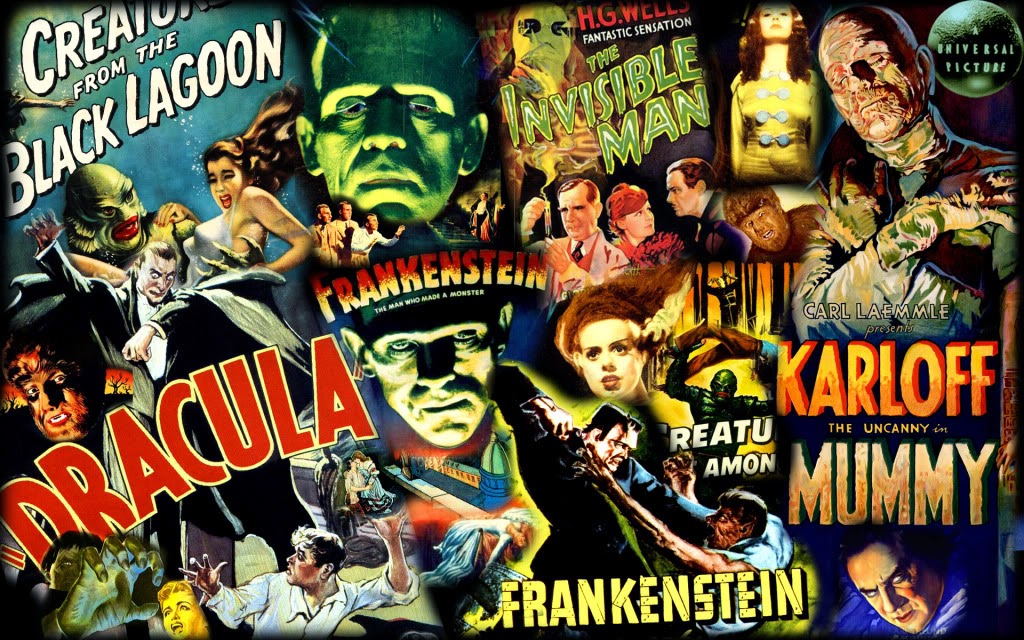
Universal Monsters

The Story So Far- This is technically the original shared universe, since the whole idea of film crossovers came from these monsters back in the '30s. Universal simply wants to revive that grand plan, with last year's Dracula Untold acting as ground zero. 

What We're Getting- Universal is planning reboots for Frankenstein, the Mummy, the Wolf-Man, the Invisible Man, and the Creature from the Black Lagoon. Reportedly, a Van Helsing reboot is also coming. Presumably this means the creatures will unite against Van Helsing once this flick hits theaters. 

Can It Work?- In theory, yes. With Universal's current mindset, no. I didn't see Dracula Untold, but I heard it was a mess. Universal apparently wants these reboots to be adventure films, completely removing the horror aspect. What they fail to understand is that the horror themes were what made those old films so great. If Universal wanted to revive their classic monsters universe by updating the tone of the '30s films, it could be a huge hit. But if Dracula Untold is the template, this is destined for failure. Also, while the 2004 Van Helsing is one of my guilty pleasures, I doubt a reboot acting as an Avengers-style monster team-up will gain any praise. Universal might be better off rebooting Abbot and Costello Meet Frankenstien, or better yet, Monster Squad.


Lego

The Story So Far- The Lego Movie may have been recently snubbed at the Oscars, but its resounding critical and commercial succes has made a return to its unique world all but inevitable. 

What We're Getting- Phil Lord and Chris Miller are returning to write the sequel, but unfortunately not to direct. Their current plan is to explore the kid from the first film in his teenage years, where his outlook on Legos is entirely different. This obviously effects Emmet in the Lego-verse, who's struggling with the revelation that there's another world out there. It sounds like a great concept, so let's hope for the best. The shared universe model comes in through two spin-offs, Lego Ninjago and Lego Batman. We know nothing of the former, but the latter will apparently pay homage to every cinematic version of the Dark Knight, and deal with whether Bats can be truly happy. Sounds like fun. 

Can It Work?- The Lego Movie 2 will at least be a financial success, but it's hard to tell how it'll fair critically with Lord and Miller not directing. Ninjago is a popular brand, but I don't know how well it'll do given it's catered to a specific fanbase. Batman on the other hand could do wonders, given the character's break out status in the first film. Given this is a kid's franchise, and the original film already set up a massive world, the shared universe concept will probably work really well for this. It's hard to tell how connected they'll all be aside from sharing a world, but this Lego-Verse seems to have all its bricks in order.


Ghostbusters

The Story So Far- There's been talk of expanding the Ghostbusters franchise beyond the original two films since...well, since the second film dropped. A third film with the original cast is now, sadly, impossible. Harold Ramis is dead, Bill Murray isn't interested, and Dan Akroyd's gone insane. Ghostbusters 3 is no longer happening....

What We're Getting- ....which is why a total reboot with an all female cast is coming. Paul Feig (Bridesmaids) is set to direct, with Melissa McCarthy, Emma Stone, and Jennifer Lawrence all in the running to star. But here's the kicker. Sony is throwing around the idea of a giant Ghostbusters universe, with multiple teams fighting those ghastly gouls. Another Ghostbusters film could enter production alongside the female one, with Channing Tatum and Chris Pratt starring. 

Can It Work?- Not likely. Fans may be pissed at the very idea of a reboot, and while an all-female team may be a huge success, I don't see a shared universe emerging from it. It'd be better to just make a sequel introducing Tatum and Pratt as new members. Why make a completely separate film? How would they be different other than the inverted genders? The return of Gozer would be better than this.


Robin Hood

The Story So Far- The Prince of Thieves has been brought to film countless times, and it looks like he's set to come again. 

What We're Getting- Sony is considering a pitch for a shared Robin Hood universe, that would see Robin and each of his Merry Men get their own films before coming together as a sort of medieval superhero team. 

Can It Work?- No. Just, no. A standalone franchise about Robin and his men? Possibly. A shared universe? No way in hell. The day a film about Friar Tuck, Little John, or Will Scarlett is made is the day I give up on Hollywood. 

Other Possibilities


Godzilla/King Kong- Here's the facts. We know these two iconic monsters have crossed over before. We know the film rights to both of them are owned by Legendary Pictures. We know last year's Godzilla film is getting a 2018 sequel. We know King Kong is coming back in 2016 with a prequel/reboot called Kong: Skull Island. It's only natural to suspect that Legendary wants to bring these two creatures together. And here's more food for thought: Legendary also owns Pacific Rim. Imagine the Kong/Godzilla universe breaching the Pacific Rim universe through those deep sea portals, and the Jeagers have to fight them. I wouldn't expect major world building from this, just good old fashioned monster fights. Make it happen, Hollywood.


Harry Potter/Wizarding World- J.K. Rowling's amazing universe is ripe for further spin-off franchises. We're already getting one with Fantastic Beasts and Where to Find Them, but given it's set 70 years before Harry, it seems more like a prequel franchise than an attempt to set up crossovers. I've already devoted a blog to explaining how a Wizarding Universe could work. Imagine Snape, Dumbledore, Voldemort, the Hogwarts Founders, the Marauders, and the Three Brothers getting their own films, plus more Beasts movies and a possible Quidditch franchise. I could see WB doing it. The only caveat is, like Star Wars, if people want to follow other characters in this world beside Harry. The lore and characters are there, but unless Rowling is overseeing them, this could turn into another gimmick.


Middle-Earth- Just like Harry, I've devoted a blog to explaining why this could work. It mostly depends on if Warner Brothers gets the rights to adapt the Silmarillion, given it's basically hundreds of smaller tales coexisting in the world of Middle-Earth. There wouldn't be accusations of stretching the material like The Hobbit, given this is a multitude of stories instead of just one. If The Hobbit proved anything, it's that audiences are in love with the world just as much as the characters in it. Frodo and Bilbo were huge hits, so who's to say Feanor, Beren and Luthien, Turin, and Earendil wouldn't be as well? Again, the only real risk is oversaturation, as people may tire of Middle Earth after constant exposure.


Star Trek- The TV shows did it, so why not the films? With a rebooted universe, you could restart Next Gen, DS9, and Voyager and have their crews cross over, and even re-do the Generations movie by bringing back the Nexus, allowing Kirk and crew to visit. But there's the tiny little problem of how this has already been done, and it indirectly doomed the previous series. Into Darkness already drew the fans' ire by remaking Wrath of Khan, so basically re-doing the entire formula of the old franchise would be a step backwards. It could still be done in theory, but it doesn't seem very likely right now.


Transformers/GI Joe- I consider both of these franchises beyond saving unless a major creative shake-up happens. But as long as both series are what they are, why not cross them over? The cartoons and comics have done it, and they're both owned by the same company. Bay should direct, as his Transformers films proved he already has a hard-on for the military. Why not just do an average Transformers film, and replace the dull military characters with the Joes? Either incorporate the continuity from the previous Joe films or just use the opportunity to reboot the property (it's not like either continuity is consistent, anyway). The thought of seeing Optimus Prime fighting side by side with Snake Eyes, or Cobra Commander with Megatron, may actually get me back into the theater. Then again it may not, but it's certainly possible.


Final Thoughts

I've now explored the shared universe concept extensively, with all its numerous possibilities. It's hard to really go in-depth about how a shared film universe can work, when Marvel is really the only franchise currently doing it. I can theorize and predict all I want, but I can't come to some great conclusion about this model the way I can with trilogies, reboots, or part fours. All the way back in my trilogy series, I talked of how the shared universe model can completely change the way Hollywood approaches serialized storytelling. That stance hasn't changed, given a shared universe still involves multiple, interlocking installments in one world. What makes the shared universe concept so unique from the sequel, though, is the characters. 

Look at how Marvel built its world. Iron Man, Captain America, Hulk, and Thor all got their own films leading into the Avengers team. Phase One may have been riddled with problems trying to sell the universe, but one thing was certain: to make the universe work, each character had to work too. And if multiple characters had films coexisting with each other, these films had to feel similar enough to sell the world but different enough to justify each film. Iron Man can't be Captain America, just as Cap can't be Thor. 

With Phase Two, Marvel realized each film could mix in elements from different genres. This would emphasize the differences between the films, and allow the creators to keep challenging themselves. Iron Man 3 was an '80s sci-fi action thriller. The Dark World pure fantasy. Winter Soldier was a conspiracy thriller, while Guardians was a full-blown space opera. Each film brought a new genre to the universe, while expanding the world through individual, character-driven stories. The key to making an effective universe lies in this approach. By all means, interlock your films. Creating an expanding narrative and weaving characters and plot threads in and out is great, and it emphasizes how everything's connected. But don't let the world building outshine the characters. Marvel learned this with Iron Man 2, and Sony learned it the hard way with Amazing Spider-Man 2. 

Rushing a shared universe never works, especially when you try forcing all your world building into one film. Allow the world to grow naturally, by putting your characters before everything. If the audience doesn't care about the characters, they won't care about the world. This is why the DCCU is on thin ice if Batman v. Superman falters. Why the template of Dracula Untold doesn't bode well for Universal. Why Fantastic Four might not get to play with the X-Men. Marvel has been in the game long enough to know what makes a good shared universe, and what doesn't. Their formula is by no means the only way to do it. People seem to think that a giant crossover has to have solo films preceding it. DC may be on to a formula where solo films come after the team-up, with the crossover itself the proof of concept. Only time will tell if this will work, but it certainly has the potential to. 

Ultimately, the key to making a great shared universe is just make good movies. If all the movies are good, and potential for a crossover is there, audiences will get excited because they want to see all the characters together. That's what gave The Avengers its massive success. That's why fans want Batman v. Superman to succeed, and why they're pissed Sony won't give Spider-Man back to Marvel. Shared universes are born from the basic desire to see awesome characters team up. But they all have to be awesome. What good is a sandbox to play in if you don't have all the cool action figures? If Hollywood gets this, then Marvel may not be king of the shared universe for long. Competition is healthy, and if it leads to multiple awesome shared universes unfolding on our screens, millions of fans will be eternally grateful. There are dozens of fictional universes out there, waiting to be mined for future movies. It's time Hollywood knew about them.